High Stakes

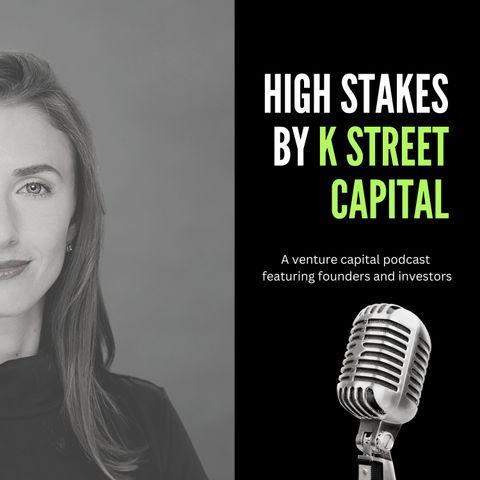
podcast artwork

Podcast by Paige Soya

High Stakes

Join seasoned investors and successful start-up founders as they weigh in on topics and trends currently dominating the venture capital space. Each episode brings together a founder and an investor to provoke a deepened understanding of the topic at hand. If you want to learn about how early-stage venture capital investing works, this show is for you.

Latest episodes

episode artwork

09 July 2026

How VCs Evaluate Pre-Revenue Startups | Paige Soya, Nick Duafala & Charles Hudson (Precursor Ventures)

What makes a pre-revenue startup worth investing in?

Before there's revenue, traction, or a long list of customers, venture investors have to make decisions with limited data. So what signals matter most? How do VCs build conviction around a founder and an idea when so much is still uncertain?

In this episode of High Stakes, Paige Soya and Nick Duafala sit down with Charles Hudson, Managing Partner at Precursor Ventures, to explore how investors evaluate startups at the earliest stages of venture.

Charles shares his framework for pre-seed investing, including how he assesses founder insight, market timing, perseverance, resourcefulness, and a founder's ability to turn an early hypothesis into a scalable company.

The conversation explores what separates exceptional founders from the rest—and why, at the pre-seed stage, investing is often as much about the founder as it is about the business.

In this episode, we discuss:

  • Why pre-revenue investing requires a different approach than later-stage venture investing
  • The two founder archetypes Charles sees most often: industry insiders and "naive outsiders"
  • How investors determine whether a founder has a unique and durable insight
  • Why proximity to a problem can be one of a founder's greatest advantages
  • The difference between product innovation and business model innovation
  • Why distribution strategy can matter just as much as the product itself
  • How VCs evaluate founders when there is little customer or revenue data
  • Why resourcefulness and perseverance are two of the strongest predictors of founder success
  • How market timing influences pre-seed investment decisions
  • Why being slightly late can sometimes be better than being too early
  • What Charles learned from founders who succeeded inside large companies but struggled as startup CEOs
  • How resilience and life experiences shape a founder's ability to navigate uncertainty

Key Takeaways

Great founders don't always have the most experience—they have the strongest insight.

At the pre-seed stage, investors look for evidence that founders understand a problem deeply and have uncovered insights that others have missed.

Resourcefulness is a leading indicator of startup success: Before founders have capital, customers, or large teams, investors can learn a great deal by observing how they create opportunities and solve problems with limited resources.

Timing can be just as important as the idea itself: Even great companies can struggle if the market isn't ready. Successful founders often launch when customer behavior, technology, and market conditions align.

At the earliest stages, investing is ultimately a bet on people: With limited financial or customer data, investors are evaluating a founder's ability to adapt, persevere, and execute through uncertainty.
00:00

34:42

episode artwork

25 June 2026

Venture Liquidity, Secondaries & How VCs Exit | Paige Soya, Nick Duafala & Andrew (Principal at Savano Capital)

How do venture capital firms actually exit their investments when startups are staying private longer than ever before?

On this episode of High Stakes, hosts Paige Soya and Nick Duafala sat down with Andrew Seter, Principal at Savano Capital, to unpack venture liquidity, the growing secondary market, and how founders, employees, and investors are accessing liquidity outside of traditional IPOs and acquisitions.

As private companies delay public offerings and remain private for longer periods of time, secondaries have become an increasingly important part of the venture ecosystem. But what exactly are they, who benefits from them, and why has the market grown so rapidly?

In this episode, we discuss:

  • What venture secondaries are and how they work
  • The difference between primary and secondary transactions
  • Why startups are staying private longer
  • The rise of the secondary market and what is driving its growth
  • How founders, employees, and investors access liquidity before an IPO
  • Why secondaries are becoming a critical component of venture capital exits
  • The future of private market liquidity

Whether you're a founder, operator, investor, or simply curious about how venture capital works behind the scenes, this episode breaks down one of the fastest-growing areas of private markets in an approachable way.

00:00

35:41

episode artwork

11 June 2026

VC Deal Timelines & Due Diligence | Paige Soya, Nick Duafala & Matt Bressler (Lookout Ventures & Fmr TDF Ventures)

How long does it actually take to raise venture capital?

In this episode of High Stakes, Paige Soya and Nick Duafala sit down with Matt Bressler, Co-Founder and General Partner at Lookout Ventures, formerly TDF Ventures, to discuss venture capital deal timelines, fundraising momentum, and the diligence process that takes place behind every investment decision.

From initial founder meetings to signed term sheets, they explore what causes fundraising processes to move quickly, what causes deals to stall, and why many of the fastest investments begin months—or even years—before a company officially starts raising capital.

Topics covered include:

  • Venture capital deal timelines
  • How investors evaluate startup opportunities
  • What creates fundraising momentum
  • Preparing for investor due diligence
  • Common fundraising mistakes founders make
  • Building investor relationships before a raise
  • Why some venture deals move faster than others

Whether you're raising your first round, preparing for a future fundraise, or simply interested in how venture capital works behind the scenes, this episode offers practical insights into how investors build conviction and make investment decisions.

Subscribe for more conversations with founders, investors, and operators shaping the startup ecosystem.

00:00

37:26

episode artwork

28 May 2026

Power Dynamics in VC | Paige Soya, Nick Duafala, Haley Bryant (Hustle Fund), & Ann Marie Guzzi (Dalmatian Ops, Angel Investor & Agora Initiative)

In this episode of High Stakes, K Street Capital’s Paige Soya and co-host Nick Duafala sit down with Haley Bryant, Partner at Hustle Fund, and Ann Marie Guzzi, angel investor, Managing Partner of Dalmatian Ops and Co-Founder of The Agora Initiative, for a deep dive into one of the most misunderstood topics in venture capital: power dynamics.

From the moment a founder starts fundraising to the moment a company exits, who actually has the power, and how does that shift over time?

The conversation breaks down:

  • Who really makes investment decisions inside VC firms
  • How LPs influence deal flow and investor conviction
  • Why founders often underestimate their leverage
  • The hidden dynamics between associates, partners, and investment committees
  • How governance changes after the check gets written
  • Why founder-investor alignment matters at exit
  • IPOs vs M&A vs secondary transactions
  • How board control and voting shares shape outcomes
  • Why relationships and reputation matter throughout the venture ecosystem

Along the way, the group shares candid insights on:

  • Why fundraising feels a lot like dating
  • The difference between scarcity and abundance mindsets
  • What happens behind the scenes during diligence
  • How market conditions shift founder leverage
  • Why the best founders ultimately hold more power than they realize

Whether you’re a founder raising your first round, an emerging investor, or simply curious about how venture capital actually works behind closed doors, this episode offers an honest look at the incentives, relationships, and structures that shape startup outcomes.

Subscribe to High Stakes for more conversations breaking down the realities of venture capital, startups, and company building.

00:00

51:54

episode artwork

14 May 2026

How VCs Evaluate Founding Teams | Paige Soya, Nick Duafala, & Neil Shah (CEO, ThinkNimble)

Most people assume VCs are evaluating traction, revenue, or the pitch deck first.

Those things matter — but often, the real signal is something harder to quantify: how a founder thinks.

In this episode of High Stakes, Nick Duafala and I sat down with Neil Shah (CEO of ThinkNimble) to unpack how investors actually evaluate founding teams — especially in a market where AI is fundamentally changing how companies get built.

A few take aways:

→ You can often tell within the first 15–20 minutes whether a founder has the qualities you want to back.

→ Investors are ultimately evaluating the quality of thinking behind the business — not just the business itself.

→ As AI removes more of the execution friction, thoughtful strategy, judgment, and founder insight become even greater differentiators.

We also get into:

  • Why second-time founders often have an edge
  • How AI is changing startup team design
  • What “deep thinking” actually looks like in founders
  • Why pattern recognition still matters in venture
  • What investors are really evaluating in that first meeting

00:00

41:58

episode artwork

30 April 2026

Angel Investors vs. VCs | Paige Soya & Dadi Akhavan (Startup-to-IPO Founder)

In this episode of High Stakes, Paige Soya sits down with Dadi Akhavan, a startup-to-IPO founder and angel investor, to break down one of the most important dynamics in early-stage investing: angel investors vs venture capitalists.

While both play critical roles in the startup ecosystem, the way they invest and what they need from their investments iis fundamentally different.

We explore how those differences shape everything from deal selection to decision-making to founder outcomes.

Key themes include:

  • Why venture capital funds are structurally driven to pursue “outlier” returns
  • How fund size, LP expectations, and mandates influence VC behavior
  • Why angel investors have more flexibility in what and when they invest
  • How early-stage founders should think about which type of capital to raise — and when
  • The tradeoffs between taking institutional money vs. staying in the angel ecosystem
  • What “stage of company” really means in practice for fundraising strategy
  • How experienced investors evaluate opportunity differently based on structure, not just preference

Dadi also shares insights from his own journey, from building companies to taking one from startup all the way to IPO, and how that experience shapes his approach to investing today.

This episode is a deep dive into the mechanics behind startup funding decisions, and what founders often overlook when choosing between angels and VCs.

00:00

39:50